
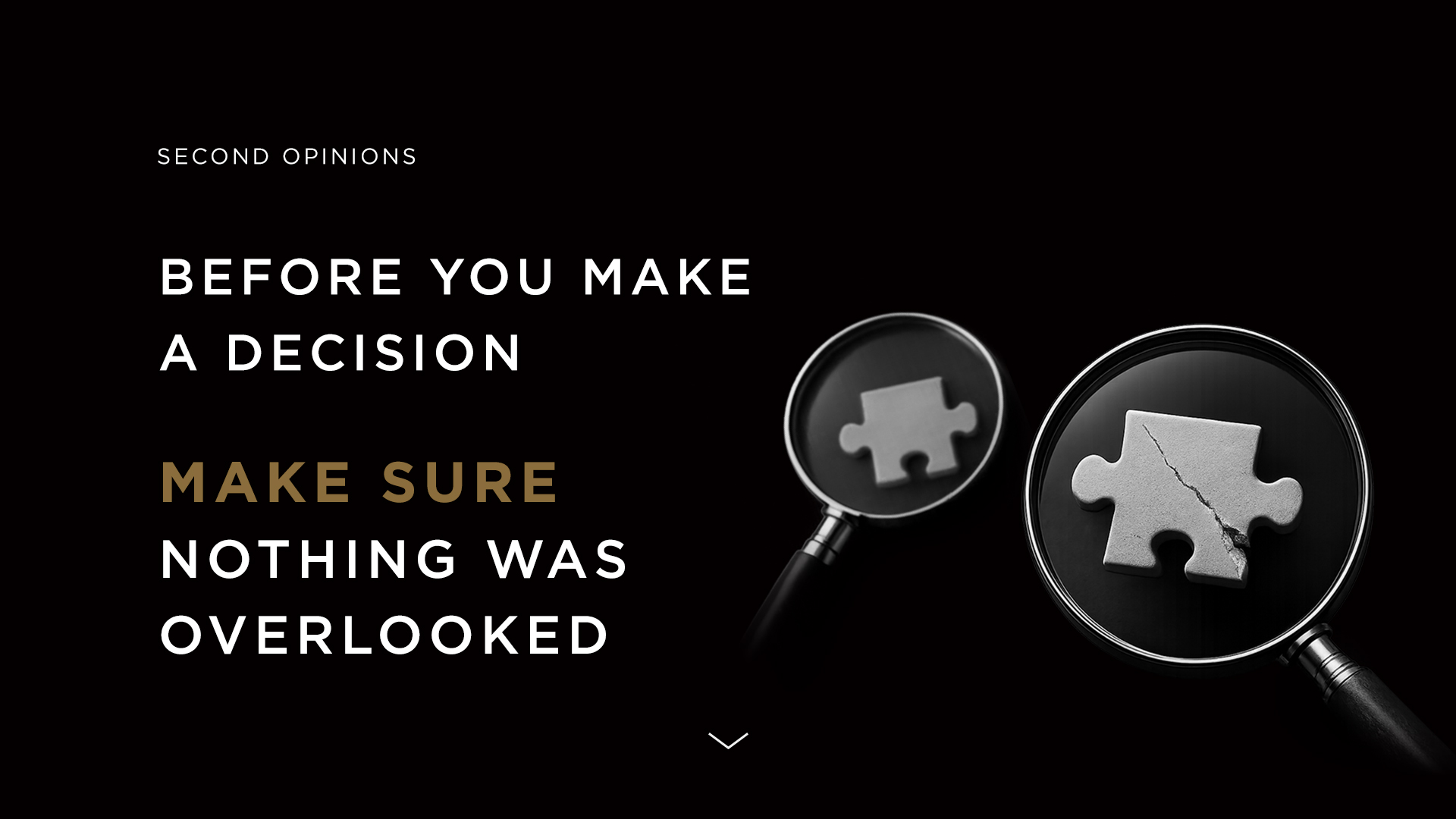
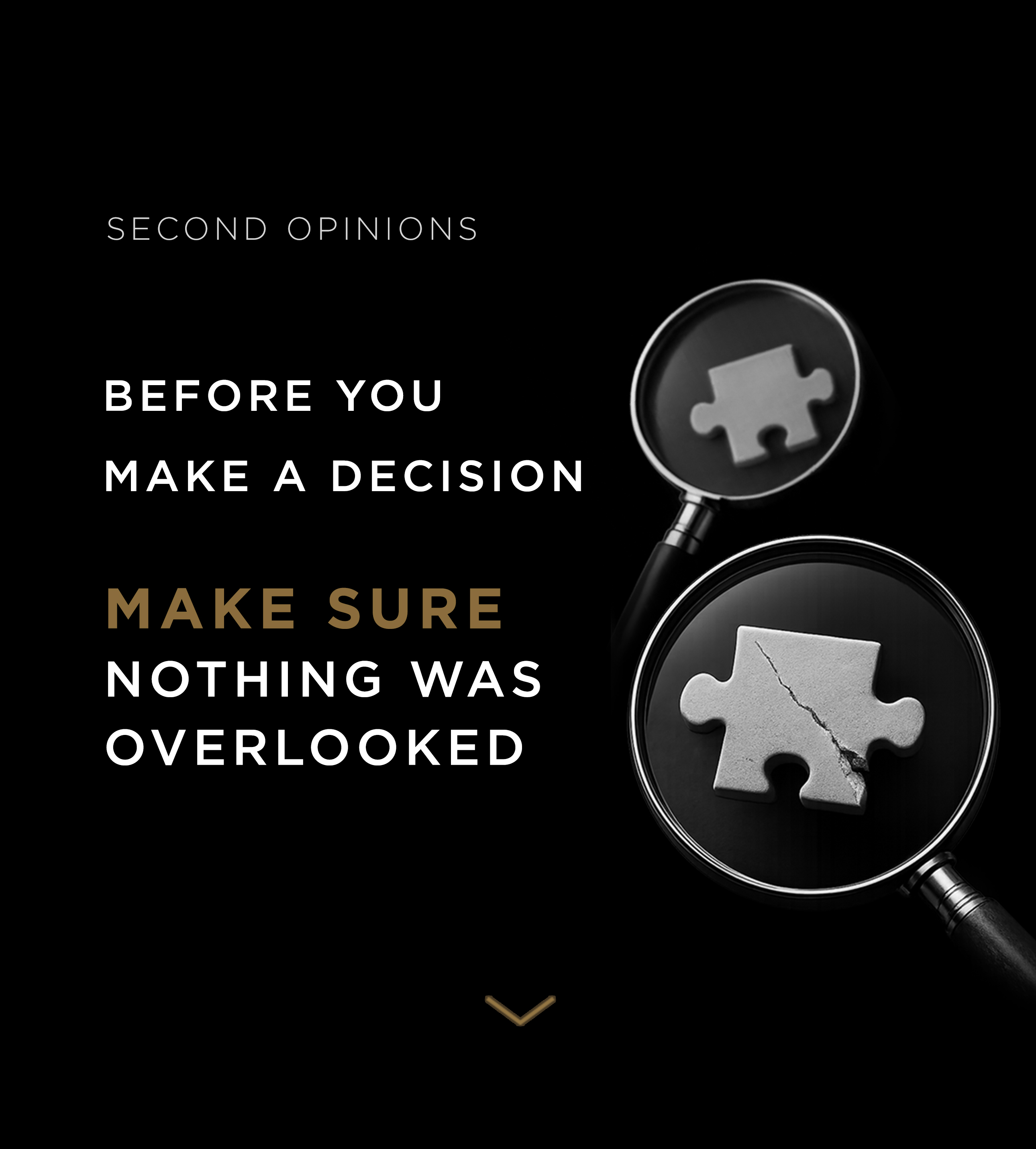
Second Opinions
Before you make a decision, make sure nothing was overlooked.
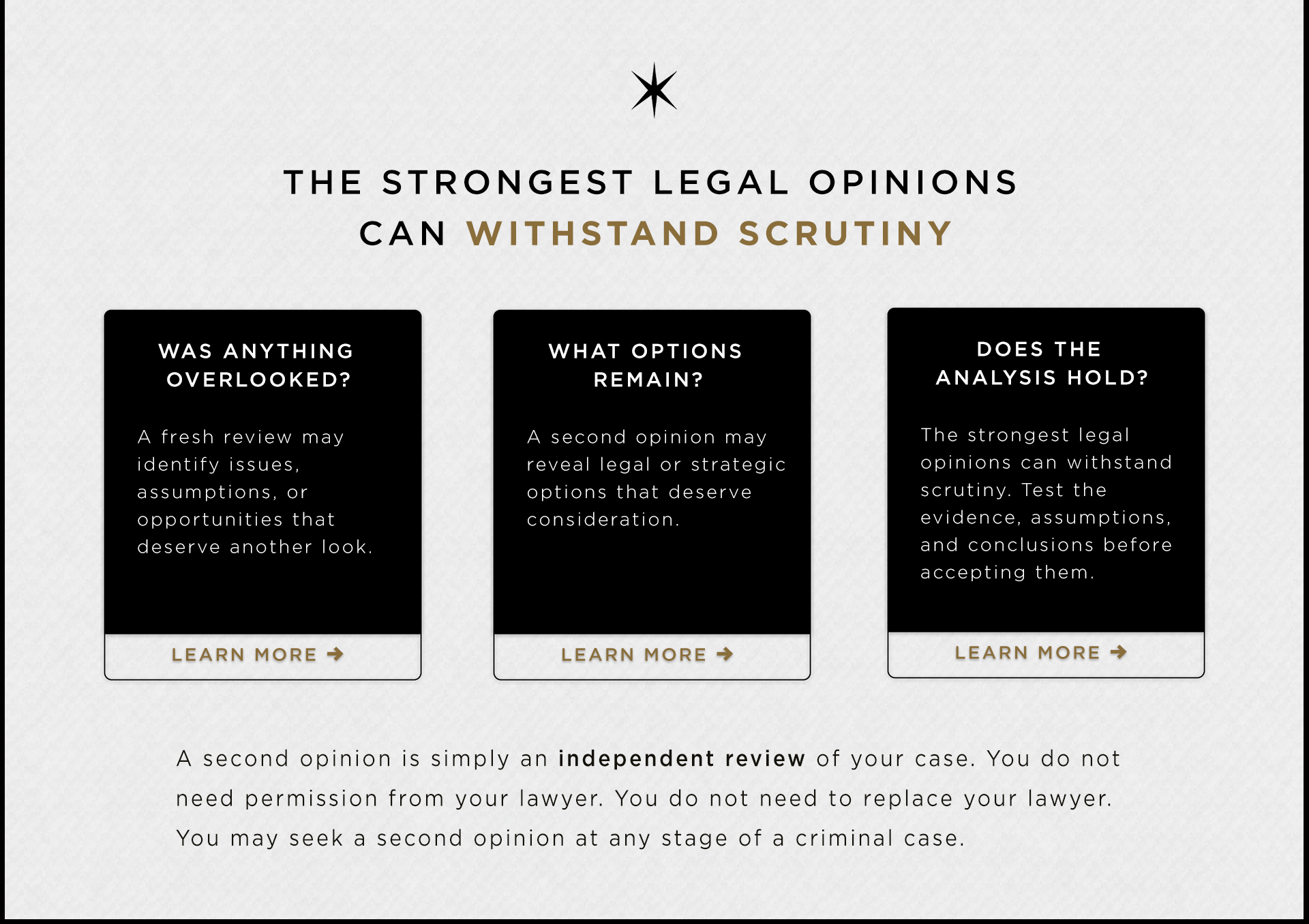
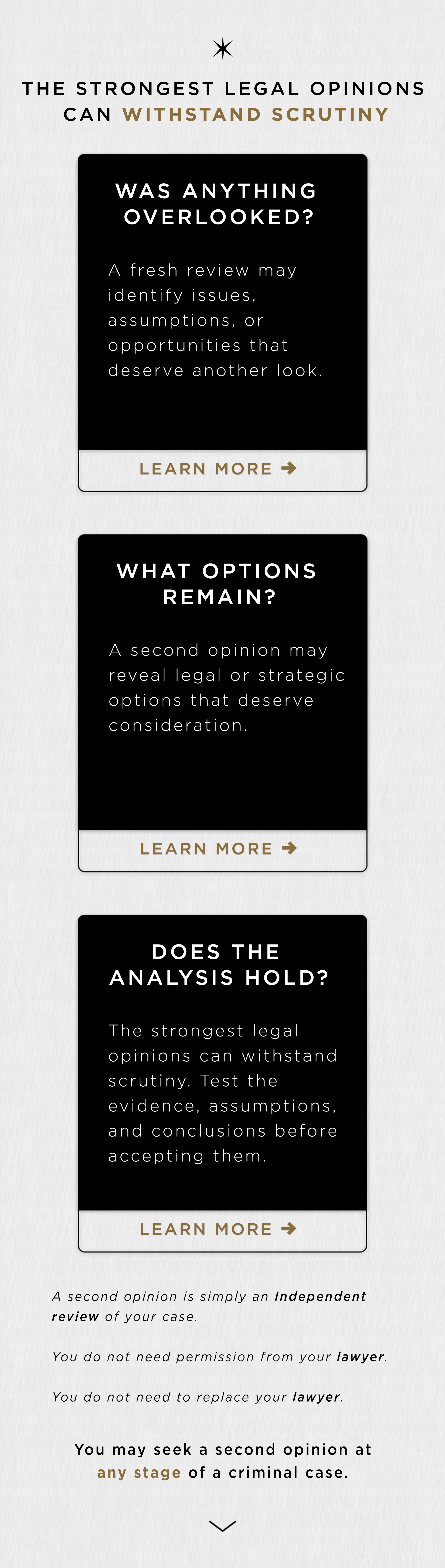
The strongest legal opinions can withstand scrutiny
- Was anything overlooked? A fresh review may identify issues, assumptions, or opportunities that deserve another look.
- What options remain? A second opinion may reveal legal or strategic options that deserve consideration.
- Does the analysis hold? The strongest legal opinions can withstand scrutiny. Test the evidence, assumptions, and conclusions before accepting them.
A second opinion is simply an independent review of your case. You do not need permission from your lawyer. You do not need to replace your lawyer. You may seek a second opinion at any stage of a criminal case.
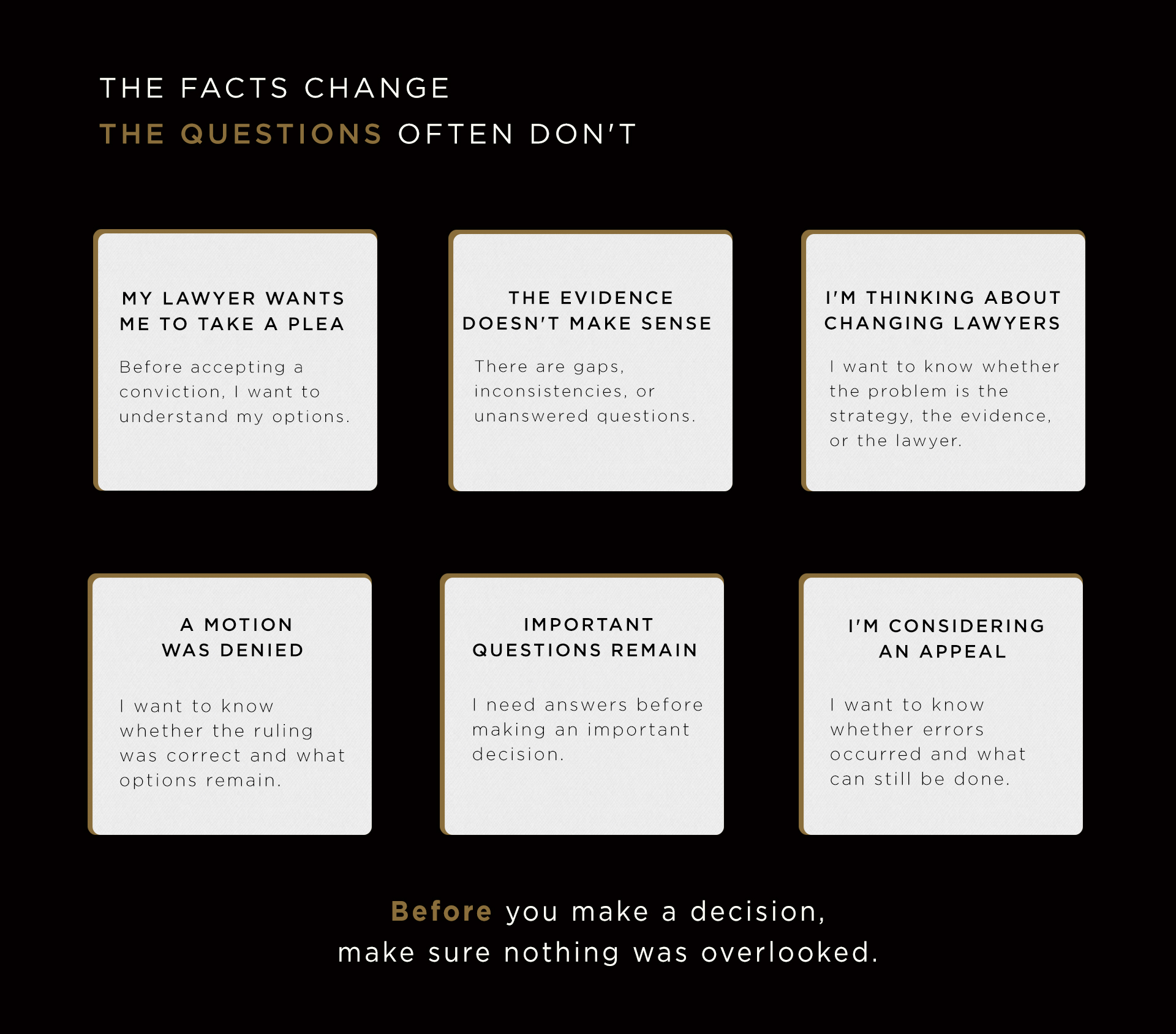
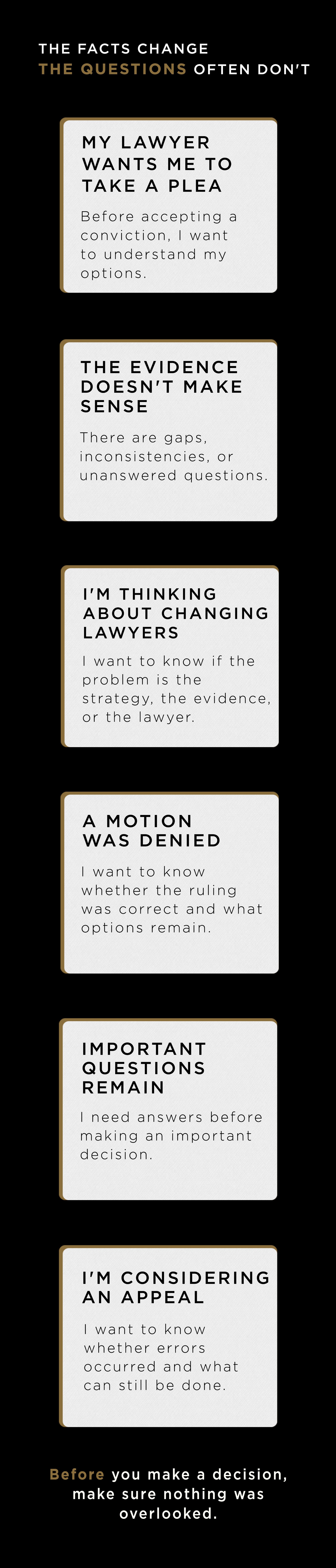
The facts change. The questions often don't.
- My lawyer wants me to take a plea. Before accepting a conviction, I want to understand my options.
- The evidence doesn't make sense. There are gaps, inconsistencies, or unanswered questions.
- I'm thinking about changing lawyers. I want to know whether the problem is the strategy, the evidence, or the lawyer.
- A motion was denied. I want to know whether the ruling was correct and what options remain.
- Important questions remain. I need answers before making a decision.
- I'm considering an appeal. I want to know whether errors occurred and what can still be done.
Before you make a decision, make sure nothing was overlooked.
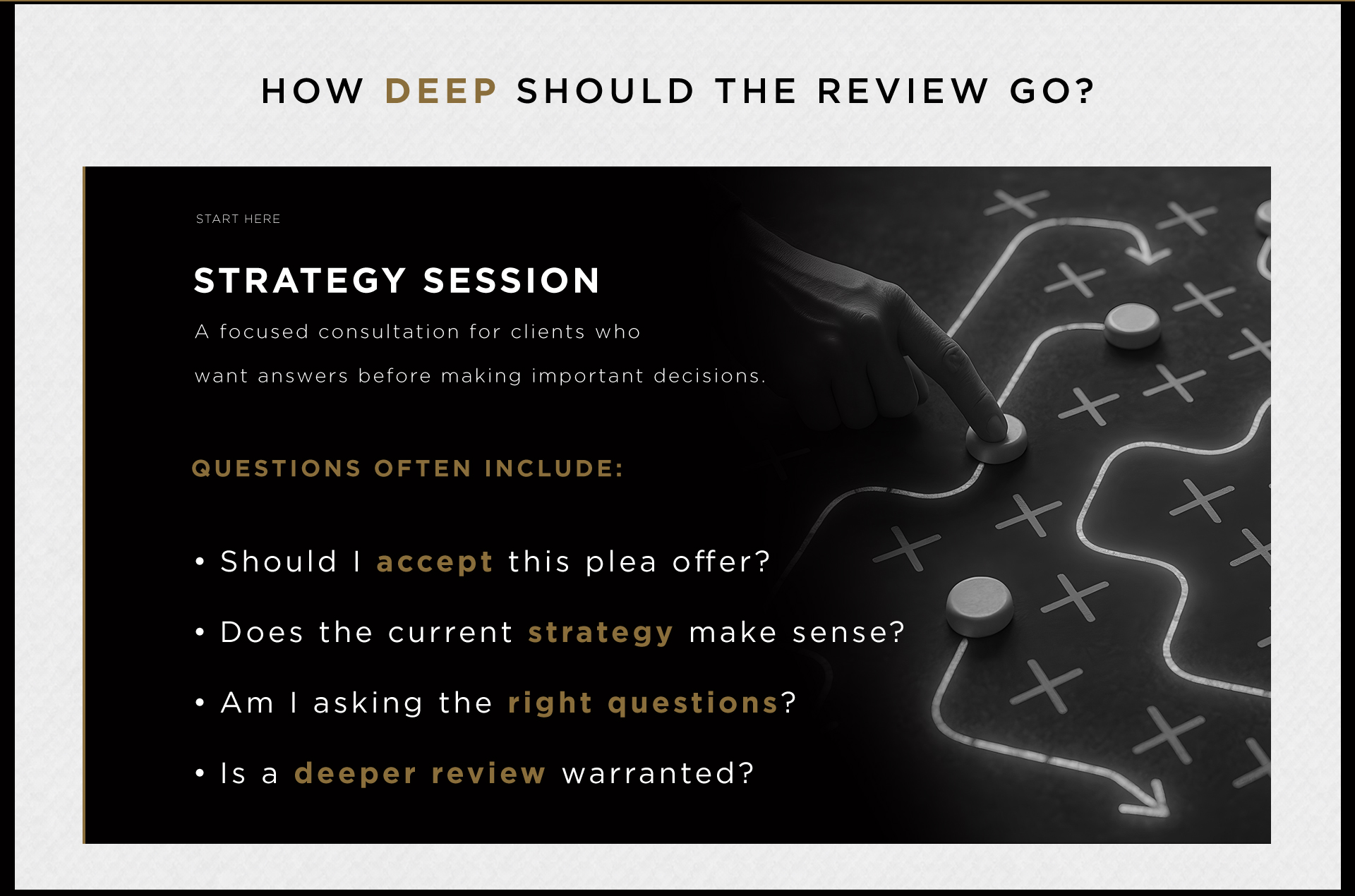
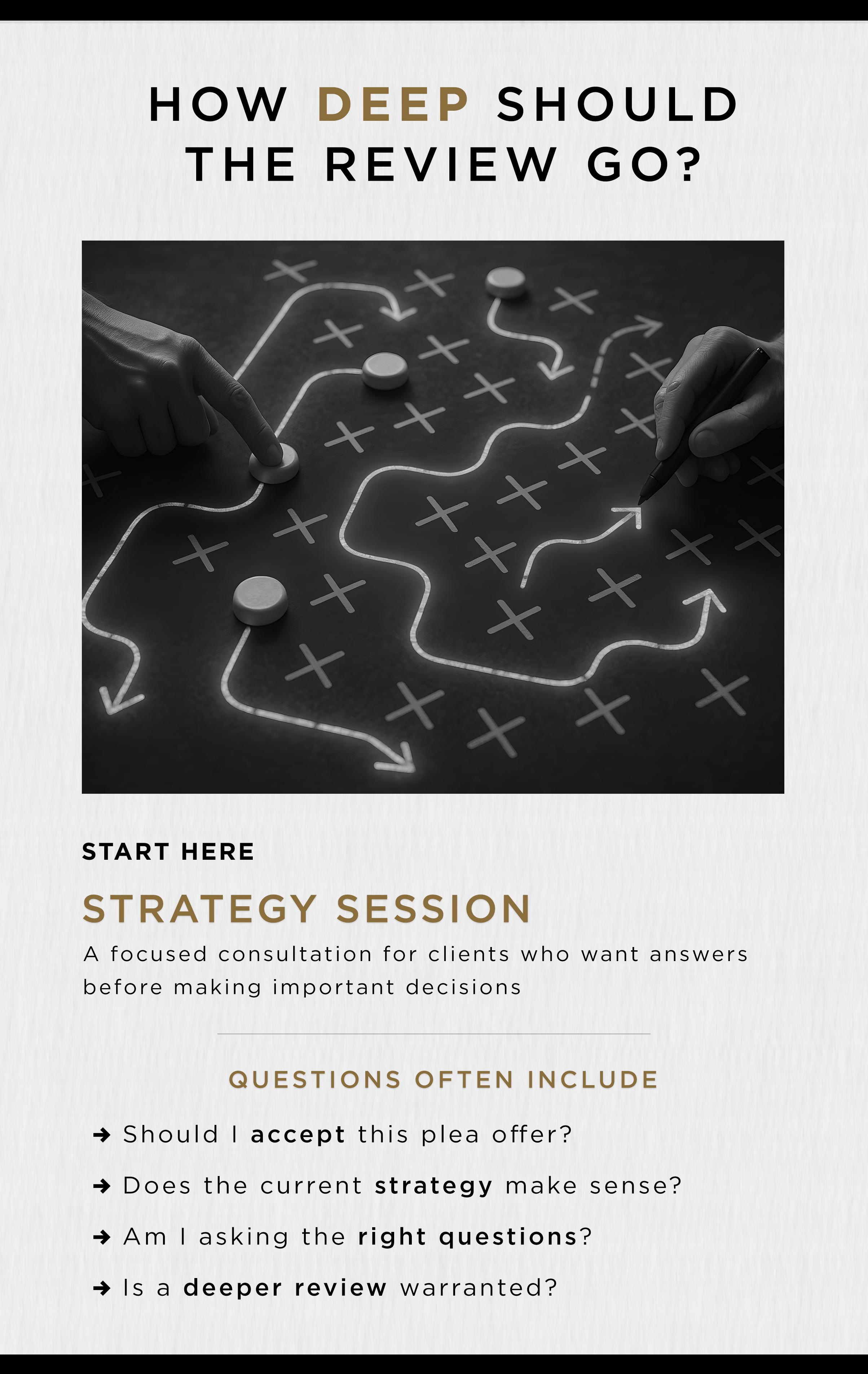
How deep should the review go?
Start here — Strategy Session
A focused consultation for clients who want answers before making important decisions. Questions often include: Should I accept this plea offer? Does the current strategy make sense? Am I asking the right questions? Is a deeper review warranted?
Step two — Record Review
When the answers require more than a conversation. An independent review of reports, discovery, motions, transcripts, and other case materials. Questions often include: Does the discovery support the theory of the case? Were important issues overlooked? Where is the case vulnerable? What opportunities remain?
Step three — Evidence Review
When the conclusions depend on the evidence itself. An independent review of body camera video, witness interviews, forensic evidence, digital evidence, and other critical materials. Questions often include: What does the evidence actually show? Does the evidence support the conclusions? Do the conclusions follow from the facts? Was anything overlooked?
Cases commonly reviewed
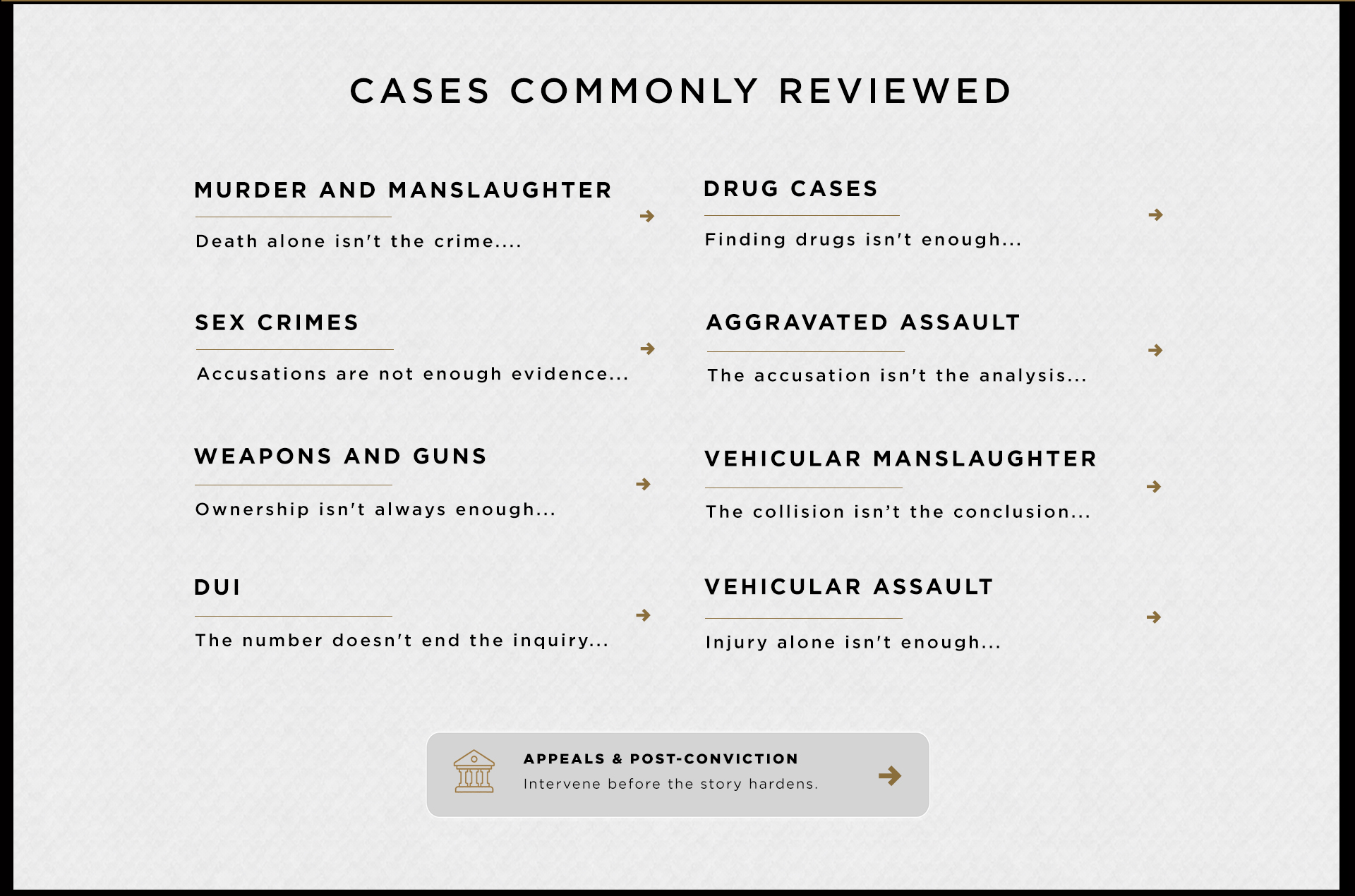
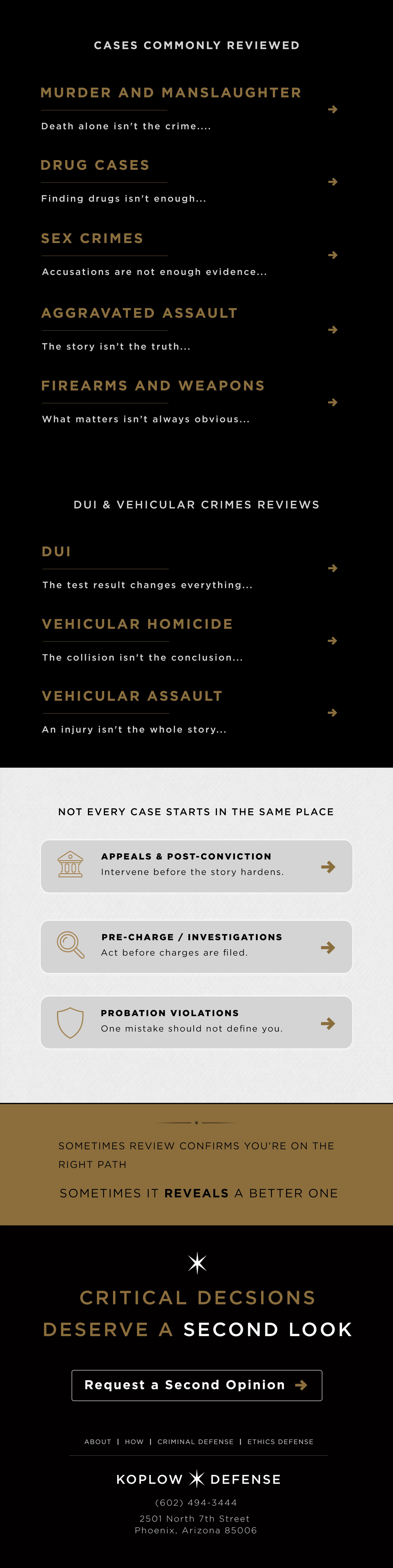
- Murder and Manslaughter — death alone isn't the crime.
- Drug Cases — finding drugs isn't enough.
- Sex Crimes — accusations are not enough evidence.
- Aggravated Assault — the accusation isn't the analysis.
- Weapons and Guns — ownership isn't always enough.
- Vehicular Manslaughter — the collision isn't the conclusion.
- DUI — the number doesn't end the inquiry.
- Vehicular Assault — injury alone isn't enough.
- Appeals & Post-Conviction — intervene before the story hardens.
Not every case starts in the same place
- Appeals & Post-Conviction — intervene before the story hardens.
- Pre-Charge / Investigations — act before charges are filed.
- Probation Violations — one mistake should not define you.

Sometimes review confirms you're on the right path. Sometimes it reveals a better one.
Critical decisions deserve a second look
Koplow Defense — (602) 494-3444 — 2501 North 7th Street, Phoenix, Arizona 85006.